- Carenest Medical Centre, SDA 60, Sector 45, Noida, Uttar Pradesh (INDIA)
- +91-9205096722
- infonestcarehospitality@gmail.com

PCOS: Symptoms, Causes, Diagnosis and Treatment – Complete Guide for Women

Can an Orthopedic Doctor Treat Back Pain and Neck Pain Without Surgery?
July 3, 2026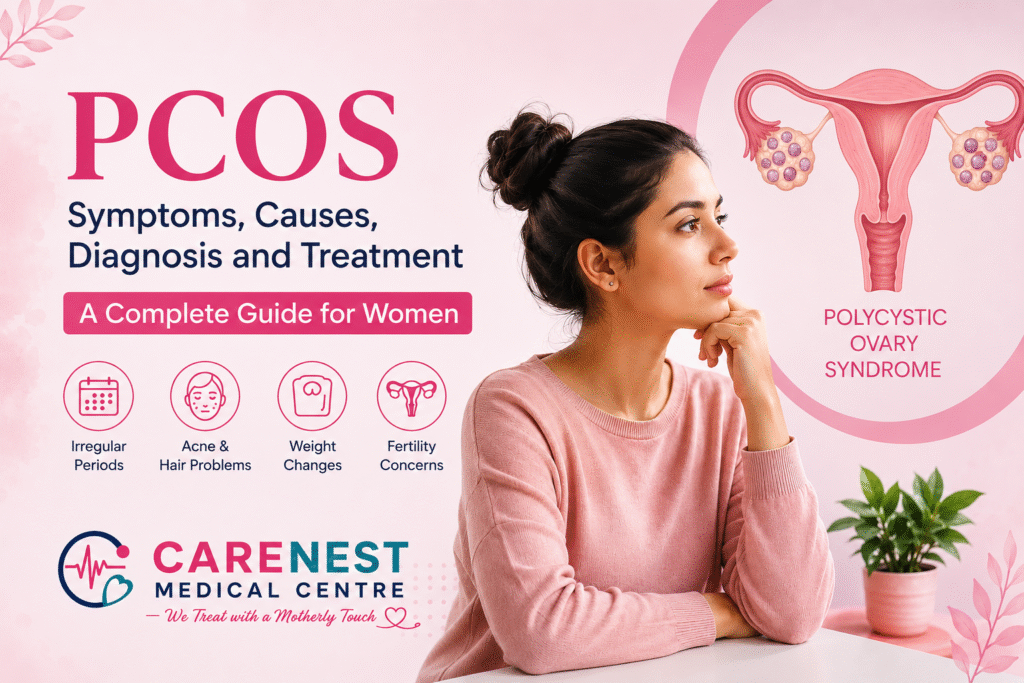
Polycystic Ovary Syndrome (PCOS) is one of the most common hormonal conditions affecting women of reproductive age. It can affect menstrual cycles, ovulation, fertility, skin, hair growth and metabolic health.
Many women experience irregular periods, acne, unwanted facial hair or difficulty becoming pregnant without knowing that PCOS could be a contributing factor.
PCOS can be effectively managed with appropriate medical evaluation, lifestyle changes and treatment based on individual needs.
In this guide, we discuss the symptoms, causes, diagnosis, treatment and fertility-related concerns associated with PCOS.
What Is PCOS?
Polycystic Ovary Syndrome is a hormonal and metabolic condition that can affect the normal functioning of the ovaries.
Women with PCOS may experience:
- Irregular or missed periods
- Irregular ovulation
- Increased androgen levels
- Acne
- Excess facial or body hair
- Hair thinning
- Difficulty becoming pregnant
- Weight gain or difficulty managing weight
- Insulin resistance and other metabolic concerns
PCOS does not affect every woman in the same way. Some women may experience several symptoms, while others may have only one or two.
According to the World Health Organization (WHO), PCOS affects approximately 10–13% of women of reproductive age worldwide, and many women remain undiagnosed.
What Causes PCOS?
The exact cause of PCOS is not completely understood. Several factors may contribute to its development.
Hormonal Imbalance
Women with PCOS may have higher levels or activity of androgens. These hormones can interfere with normal ovulation and may contribute to acne and excessive hair growth.
Insulin Resistance
Some women with PCOS have insulin resistance, meaning their cells do not respond effectively to insulin.
The body may compensate by producing more insulin, which can contribute to increased androgen activity and irregular ovulation.
Genetics
PCOS may sometimes run in families. Having a close family member with PCOS can increase the likelihood of developing the condition.
Metabolic and Lifestyle Factors
Body weight, physical activity, diet and other metabolic factors can influence PCOS symptoms and overall health.
However, PCOS is not simply a condition caused by being overweight. Women of different body types can have PCOS.
Common Symptoms of PCOS
PCOS symptoms can vary from one woman to another.
1. Irregular Periods
Irregular menstrual cycles are one of the most common signs of PCOS.
You may experience:
- Long gaps between periods
- Missed periods
- Unpredictable menstrual cycles
- Infrequent periods
However, irregular periods can have many causes, so they should not automatically be assumed to be due to PCOS.
2. Excess Facial or Body Hair
Increased androgen activity may cause unwanted hair growth on the face, chin, upper lip, chest or abdomen.
This is known as hirsutism.
3. Acne
Hormonal changes associated with PCOS can contribute to persistent or recurrent acne, particularly around the face and jawline.
4. Hair Thinning
Some women may experience thinning of scalp hair or increased hair loss.
5. Difficulty Becoming Pregnant
PCOS can interfere with regular ovulation.
When ovulation occurs less frequently, conception may become more difficult.
However, PCOS does not mean that pregnancy is impossible. Many women with PCOS become pregnant naturally or with appropriate medical treatment.
6. Weight Changes
Some women with PCOS experience weight gain or find it difficult to lose weight.
However, PCOS can also occur in women who are not overweight.
Does Having Polycystic Ovaries Mean You Have PCOS?
Not necessarily.
An ultrasound may show multiple small follicles in the ovaries, but this finding alone does not necessarily mean that a woman has PCOS.
A proper diagnosis considers the patient’s:
- Menstrual history
- Symptoms
- Clinical examination
- Hormonal evaluation where appropriate
- Ultrasound findings when indicated
- Other possible causes of the symptoms
Therefore, PCOS should not be diagnosed solely from an ultrasound report.
How Is PCOS Diagnosed?
There is no single test that confirms PCOS in every woman.
A gynaecologist may evaluate:
- Menstrual history
- Ovulation pattern
- Symptoms of increased androgen activity
- Medical and family history
- Physical examination
- Blood tests when appropriate
- Ultrasound examination when clinically indicated
Other conditions that can cause similar symptoms may also need to be ruled out.
This is why professional medical evaluation is important before starting treatment.
Can PCOS Be Cured?
PCOS is generally considered a long-term condition rather than a condition with one permanent cure.
However, PCOS symptoms and associated health risks can often be managed effectively.
Treatment depends on factors such as:
- Symptoms
- Age
- Overall health
- Menstrual pattern
- Metabolic health
- Whether pregnancy is desired
- Other medical conditions
There is no single treatment that is suitable for every woman with PCOS.
PCOS Treatment Options
Lifestyle Management
Healthy lifestyle habits are an important part of PCOS management.
Depending on individual needs, a doctor may recommend:
- Regular physical activity
- A balanced diet
- Adequate sleep
- Appropriate weight management
- Limiting highly processed foods
- Regular health check-ups
Lifestyle changes can support overall health and may improve some PCOS-related symptoms.
Treatment for Irregular Periods
Depending on the individual situation, doctors may recommend hormonal treatment to regulate periods and protect the uterine lining.
Hormonal medicines should only be taken after appropriate medical advice.
Treatment for Acne and Excess Hair
Treatment may involve medicines or cosmetic approaches depending on the severity and underlying hormonal factors.
A gynaecologist may also recommend dermatological consultation when required.
Treatment When Pregnancy Is Desired
For women who are trying to conceive, treatment may focus on improving or inducing regular ovulation.
The appropriate treatment depends on the individual’s medical history and fertility assessment.
Fertility medicines should not be taken without medical supervision.
PCOS and Pregnancy
PCOS can make ovulation irregular, which may make conception more difficult for some women.
However, having PCOS does not mean you cannot become pregnant.
If you have been trying to conceive and have irregular periods, consulting a gynaecologist or fertility specialist can help identify whether irregular ovulation or another factor is affecting fertility.
Can PCOS Affect Long-Term Health?
PCOS is not only a reproductive health condition.
Some women with PCOS have an increased risk of metabolic problems, including:
- Insulin resistance
- Type 2 diabetes
- Obesity
- Abnormal cholesterol levels
PCOS can also affect emotional wellbeing and quality of life.
Depending on individual risk factors, regular medical monitoring may therefore be recommended.
When Should You See a Gynaecologist?
You should consider consulting a gynaecologist if you experience:
- Consistently irregular periods
- No period for several months
- Very heavy menstrual bleeding
- Persistent acne with irregular periods
- Excess facial or body hair
- Unexplained hair thinning
- Difficulty becoming pregnant
- Significant unexplained weight changes
- Other symptoms affecting your daily life
A sudden or significant change in your normal menstrual pattern should also be medically evaluated.
Frequently Asked Questions About PCOS
Can a thin woman have PCOS?
Yes. PCOS can occur in women of different body types. Being overweight is not a requirement for PCOS.
Does PCOS always cause infertility?
No. PCOS may interfere with ovulation, but many women with PCOS can conceive naturally or with appropriate medical treatment.
Can PCOS go away?
PCOS is generally considered a long-term condition. However, symptoms can change over time and can often be effectively managed.
Is PCOS dangerous?
PCOS can be managed, but some women may have increased risks of metabolic and reproductive health problems. Appropriate medical care and monitoring can help manage these risks.
Is an ultrasound enough to diagnose PCOS?
No. An ultrasound alone is generally not sufficient. A healthcare professional should consider symptoms, menstrual history and appropriate investigations.
Can lifestyle changes help with PCOS?
Yes. Regular physical activity, a balanced diet, adequate sleep and appropriate weight management can support overall health and may improve some PCOS-related symptoms.
Final Takeaway
PCOS is a common hormonal condition that can affect periods, ovulation, fertility, skin, hair and metabolic health.
Irregular periods should not simply be ignored or self-diagnosed as PCOS. Several other conditions can cause similar symptoms.
If you are experiencing irregular periods, difficulty conceiving, excessive facial hair, persistent acne or other hormonal symptoms, consult a qualified gynaecologist for proper evaluation and personalised treatment.
Looking for a Gynaecologist in Noida?
Carenest Medical Centre provides healthcare services for women’s health and gynaecological concerns.
If you are experiencing symptoms associated with PCOS, menstrual irregularities, fertility concerns or other gynaecological problems, consult a qualified healthcare professional for personalised medical advice.
Book a Gynaecology Consultation at Carenest Medical Centre, Noida.